

It’s appraisal season again, a time that often stirs mixed emotions across teams. While performance reviews are designed to measure outcomes, they also deeply affect how employees feel about themselves, their work, and their future.
For leaders, this is not just about delivering scores or incentives, it’s about managing human emotions with empathy and clarity.
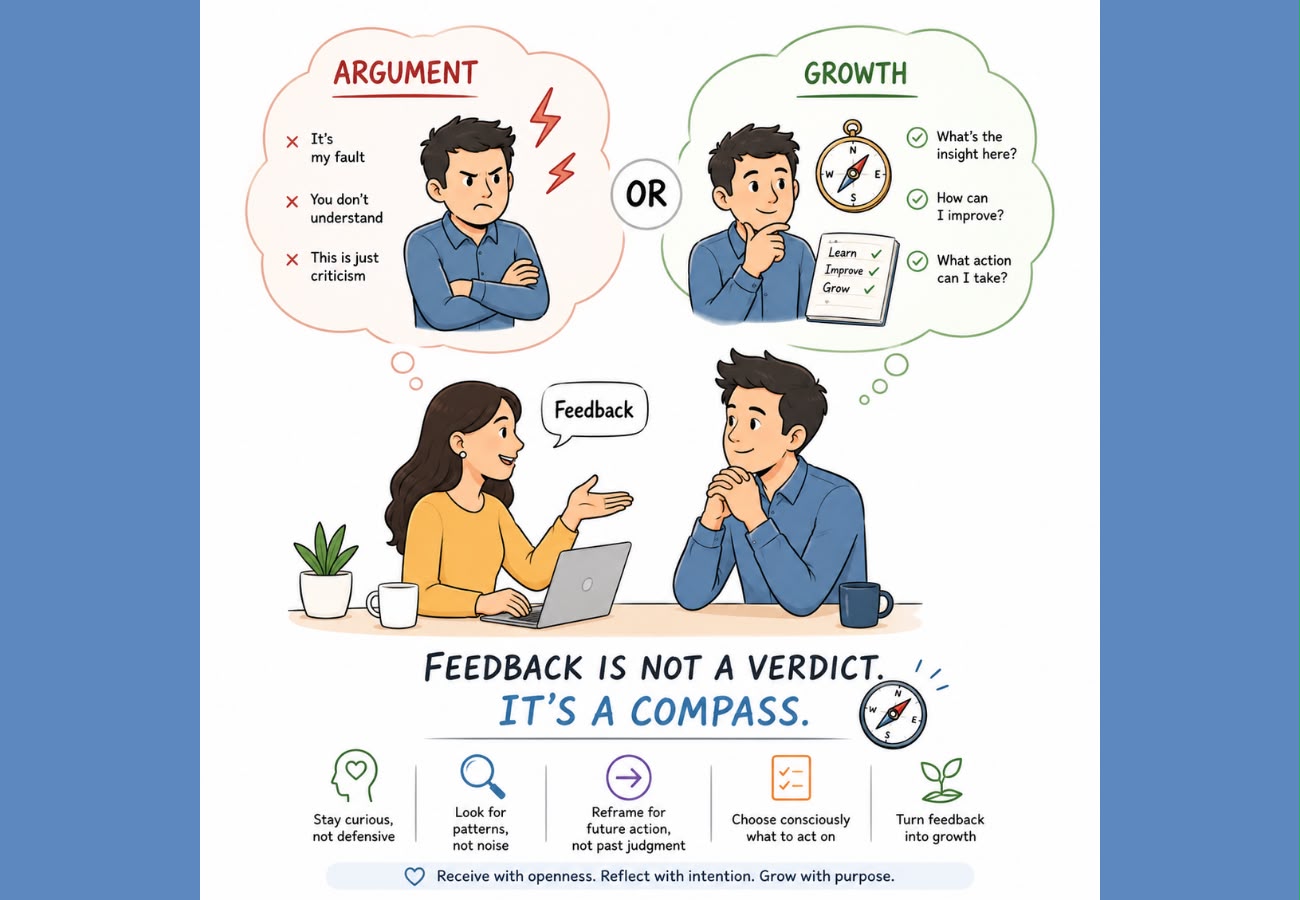
• Constructive feedback is a growth conversation. Specially for those whose scores are lower, leaders must balance honesty with encouragement; highlighting strengths alongside areas of improvement framed as a pathway to growth rather than a judgment.
• Gone are the days of formal cabin reviews. Today’s workforce especially Gen Z values authenticity and casual, human interactions. Sometimes, a conversation over coffee, during a walk, or in a neutral space can be more impactful than a formal sit-down. It signals openness, approachability, and genuine care.
• Appraisals can trigger an emotional rollercoaster – anticipation, anxiety, disappointment, relief. Leaders who pause to acknowledge emotions, listen actively, and respond with empathy help higher retention, stronger morale, and better long-term performance. People don’t disengage because of feedback – they disengage because of how it’s delivered !
Rethinking Bottom-Up Feedback: Beyond the 360 Checkbox
Here are creative, practical alternatives leaders can try:
1. “One Thing I Should Start / Stop / Continue” Conversations
Instead of long surveys, ask each team member just three prompts. Simple. Powerful. Actionable.
2. The Leadership Retro
Once a quarter, ask:
What helped you perform better? What slowed you down? What should leadership experiment with next?
3. Anonymous Theme Mapping
Collect anonymous feedback, cluster it into themes, and openly discuss what you will and won’t act on and why.
4. Public Learning, Private Correction
When leaders share what they learned from feedback (not who gave it), it normalizes upward dialogue and removes fear.
Bottom-up feedback works only when employees see reflection followed by visible change.
#MyThoughts:
Performance management is evolving.
It’s no longer just about scores, bell curves, or incentives. It’s about conversations, emotions, and relationships. Leaders who approach appraisals with empathy, openness, and two-way dialogue don’t just evaluate performance – they elevate people.
And when people feel seen, heard, and supported, performance follows.